The combined work of experts in cardiology, cardiothoracic surgery, cardiovascular anesthesia, interventional radiology, and genetics help determine the causes of aortic diseases, such as thoracic aortic aneurysm and aortic dissection, and to find safer treatments. These procedures are offered:
• Aortic and arterial endovascular repair
• Aortic homograft
• Aortic root replacement
• Aortic valve replacement
• Aortic valve surgery
• Balloon aortic valvuloplasty
• Balloon mitral valvuloplasty
• Balloon valvuloplasty
• Endovascular aneurysm repair (EVAR)
• Endovascular stent graft
• Heart valve replacement
• Mitral valve repair surgery
• Thoracic aortic aneurysm repair
• Transcatheter aortic valve replacement (TAVR)
• Tricuspid valve surgery
• Valvular surgery


List of MD’s

Michael Fischbein, Cardiothoracic Surgeon
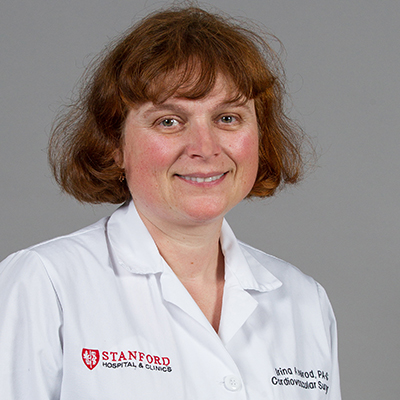
Irina Axelrod, Physician Assistant

Amelia Claire Watkins, Cardiothoracic Surgeon

Emily Tognozzi, Physician Assistant
Our Aortic Surveillance service is designed to provide measurements for patients with conditions affecting the aorta, such as aortic aneurysms or dissections. Utilizing CT and MRI imaging technologies, we measure the aorta's diameter at precisely the same locations across consecutive exams. This consistent approach ensures accuracy and reliability in tracking the progression of aortic conditions over time.
For each patient, every measurement captured during the imaging exams is carefully logged to construct a comprehensive, time-based graph. This visual representation offers a clear and ongoing record of the aorta's growth or any changes in its structure. Such detailed monitoring is particularly crucial for patients with chronic aortic conditions, enabling surgeons to observe the aorta's growth trends accurately and make timely, evidence-based surgical decisions.
In addition to diameter measurements, our service provides advanced imaging analyses, including Curved Planar Reformation (CPR), Virtual Reconstruction (VR) images, and segmentation, enhancing understanding of the patient's aortic disease.


Our 3D Printing Service provides anatomical 3D printed models for surgical planning and education. 3D prints can be requested during the 3D imaging ordering process. To achieve optimal results we require high-resolution CT or MRI scans. Once the scan is obtained, we begin the process by segmenting the medical images to isolate specific anatomical structures. This segmented data is then converted into a 3D model and reviewed by the requestor.
Final models are produced using advanced 3D printing technologies such as Fused Deposition Modeling (FDM), Stereolithography (SLA), and PolyJet. We offer hand delivery for on-site requestors and mail delivery for those at other Stanford locations. Additionally, we are exploring the development of custom cutting guides to assist in surgical procedures.


